A family-office framework for evaluating the advertised wellness program at St. Regis Residences, Sunny Isles Beach, with particular attention to appointment capacity, household and guest eligibility, outside practitioners, and the documents needed before purchase.
For a family office evaluating St. Regis® Residences Sunny Isles, the central wellness question is not simply what appears on the amenity schedule. It is whether the proposed facilities, eligibility rules, and service arrangements can accommodate the household’s actual routines. A beautiful treatment suite and a dependable weekly appointment are different propositions.
The property at 18801 Collins Avenue, Sunny Isles Beach, FL 33160, is being developed by Fortune International Group and Château Group. The advertised program combines spa, fitness, personal care, dining, and outdoor leisure. These are planned amenities-not proof of delivered facilities, operating capacity, or enforceable access rights.
A useful diligence file separates three questions: what is advertised, what the governing documents authorize, and what the eventual operation can reliably deliver. That distinction matters particularly when a purchase is intended to support multigenerational visits or continuity with trusted practitioners.
The advertised 70,000-plus square feet covers the broader amenity program, including wellness, fitness, dining, entertainment, and outdoor areas. It is not a measurement of spa space and should not serve as a proxy for treatment availability.
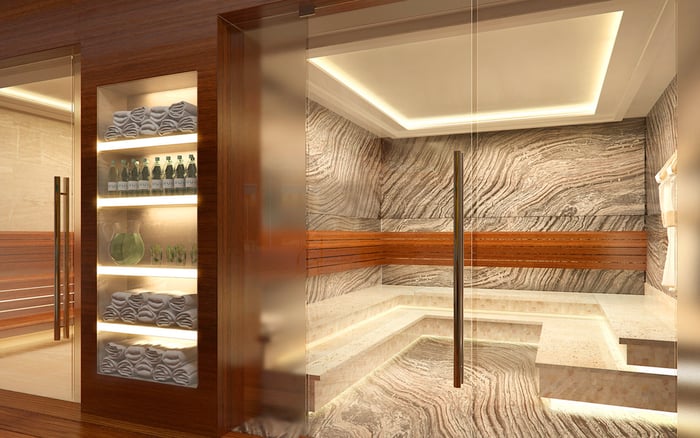
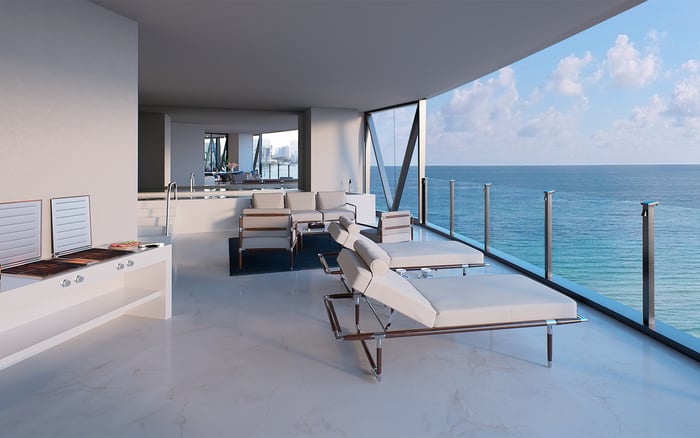
The planned wellness offering includes separate men’s and women’s spas with locker rooms, saunas, and steam rooms; individual and couples treatment rooms; a vitality pool with a wet/shower area; and an outdoor relaxation terrace with plunge pools. A spa concierge, juice and healthy-nutrition bar, beauty salon, and barbershop also appear in the program.
The fitness program includes an oceanfront fitness center, multipurpose rooms for yoga, Pilates, and spinning, an outdoor fitness terrace, and a virtual-trainer room. These features establish the intended breadth of the experience-not how many residents can use the facilities comfortably at once.
Request room and treatment-table counts, staffing by shift, service durations, turnaround allowances, and operating hours. Then ask how reservations, peak-hour restrictions, and cancellations will work. Daily appointment capacity and occupancy limits remain unconfirmed.
If Bentley Residences Sunny Isles is also on the shortlist, apply the same capacity questions independently rather than treating amenity square footage as a comparable service metric.
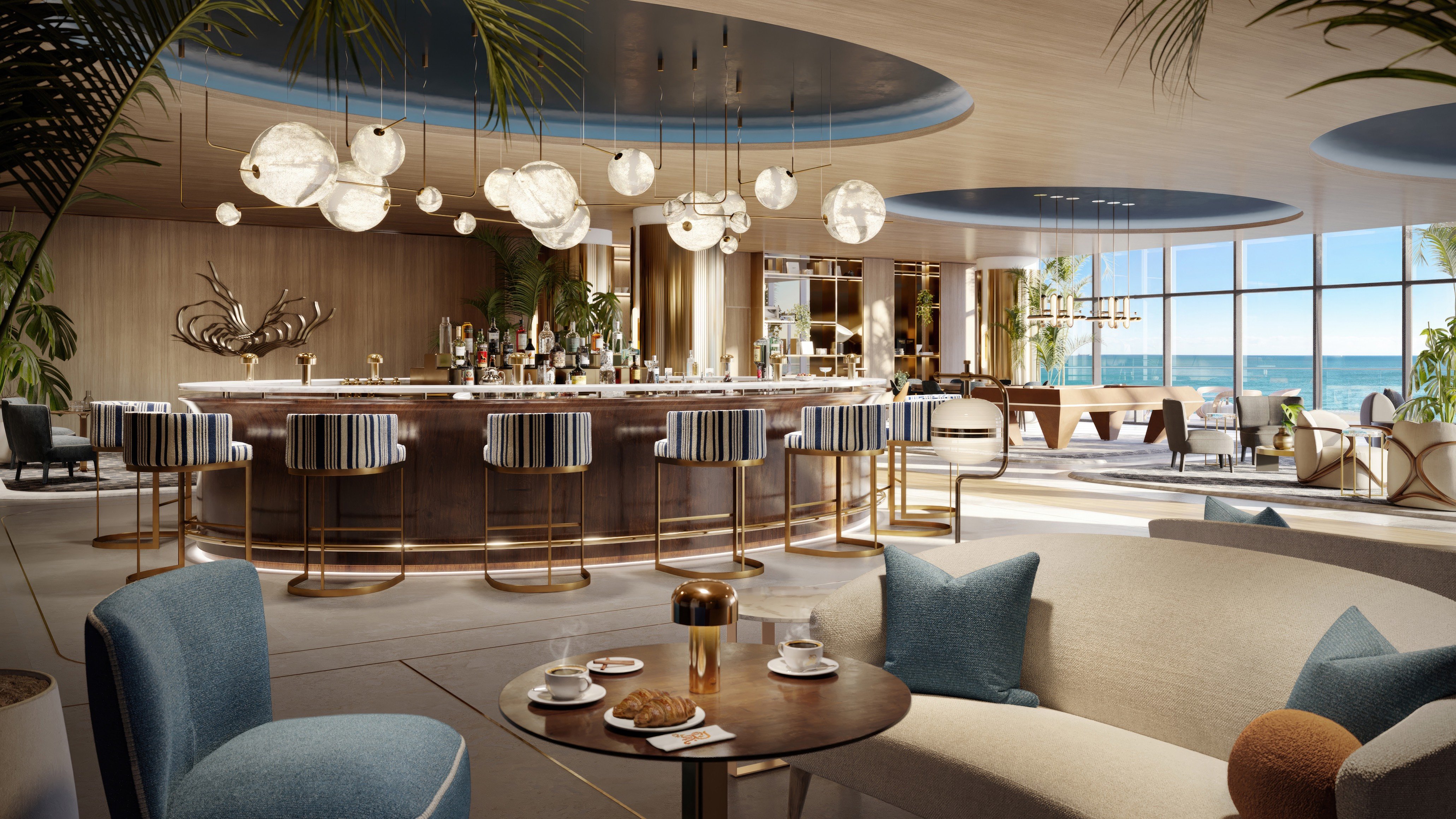
The towers are planned without hotel premises, so hotel-style public access should not be assumed. Likewise, the advertised Residence Club and Ellipse Club encompass social, dining, lounge, and entertainment facilities; they do not establish an entitlement for outside members.
The complete eligibility policy for owners’ guests, family members, renters, and outside club members remains unconfirmed. That does not mean a policy does not exist. It means the purchase decision should rest on applicable written rules, not assumptions about the brand.
Ask management to distinguish accompanied visitors from unaccompanied guests, and overnight guests from day visitors. Confirm whether an owner must be present, whether visits require advance registration, and whether reservation or guest-pass charges apply.
For a family office, the eligibility schedule should also address corporate occupants, household staff, minors, and caregivers. Request separate answers for the spa, studios, pools, locker rooms, and terraces. Permission to enter the building is not permission to use every amenity.
The advertised spa concierge is a service feature, not a provider-access rule. It does not establish that in-house providers are mandatory, that independent providers are permitted, or that residents may reserve shared treatment rooms for them.
Separate two questions in writing. First, may a resident invite an independent therapist, trainer, or clinician into the private residence? Second, may that practitioner work in shared wellness facilities? Neither permission is confirmed.
Request the onboarding requirements for licenses, insurance, background checks, registration, waivers, and indemnification. Ask about equipment delivery and storage, and whether medical or rehabilitation services are subject to different rules from personal training or massage. No specific insurance limit, registration fee, or credentialing standard is established here.
A household considering The Well Bay Harbor Islands alongside this property should make the same requests separately. Neither wellness positioning nor a concierge offering substitutes for project-specific permission to retain a preferred practitioner.
Translate the policy discussion into a hypothetical household schedule. Consider a visiting adult family member seeking an early training session, an owner requesting a couples treatment, and a caregiver accompanying a relative to the wellness area. These are diligence scenarios, not confirmed uses.
For each scenario, request an answer covering eligibility, owner presence, reservation priority, supervision, fees, and practitioner approval. This approach exposes distinctions that a general assurance of “guest access” could leave unresolved.
Extend the exercise beyond the spa. The advertised Beach Club includes cabanas, chaise lounges, umbrellas, beach service, and a beach bar and grill. Confirm whether its access and booking rules differ from those for wellness facilities. The objective is a coherent household experience, not a collection of individually attractive amenities with incompatible permissions.
Request a schedule distinguishing services included in assessments from separately charged treatments, training, guest access, and other services. Guest-pass and practitioner-registration fees remain unconfirmed. Neither free access nor a particular charge should enter the ownership budget as an established fact.
Identify the intended spa operator and the entity responsible for staffing, reservations, complaints, and provider approvals. Ask counsel to review the applicable operator agreement and determine which service commitments, if any, are contractual rather than promotional.
The same review should address delayed delivery or material changes to amenities. Request an explanation of available contractual remedies without assuming that a specific remedy exists. For a household relying on regular treatment or rehabilitation, unresolved permissions warrant explicit attention before wellness convenience is assigned material value in the purchase decision.
The final file should contain the declaration, condominium documents, club rules, amenity operating manual, applicable spa-operator agreement, and written management policies. Counsel should identify which documents govern and how relevant rules may be amended.
Alongside those documents, maintain a concise decision sheet recording the advertised facility, eligible users, practitioner permissions, booking constraints, charges, and responsible operator. Mark unresolved matters as unresolved; do not convert a verbal assurance into an assumed right.
The attraction is clear: a residence designed around a broad wellness and leisure program. The family-office standard is more exacting: dependable access for the right people, at useful times, under documented rules.
For a discreet perspective on South Florida residences and buyer priorities, explore MILLION.
If branded residences are on your mind — as a home or as an allocation — we would be glad to share what we are seeing, privately.
Begin a quiet conversationThe property is at 18801 Collins Avenue, Sunny Isles Beach, FL 33160. Fortune International Group and Château Group are the developers.
The towers are planned without hotel premises. Hotel-style public amenity access should not be assumed.
No; that figure covers the broader wellness, fitness, dining, entertainment, and outdoor amenity program.
The program includes separate men’s and women’s spas, saunas, steam rooms, individual and couples treatment rooms, a vitality pool, and an outdoor terrace with plunge pools.
Daily appointment capacity remains unconfirmed. Room counts, staffing, service durations, and operating hours need written confirmation.
A complete eligibility policy remains unconfirmed. Confirm owner-presence requirements and separate rules for each user category and facility.
Permission for independent practitioners is not established. Entry into a private residence and use of shared wellness facilities require separate confirmation.
No such requirement is established by the concierge offering. It also does not establish permission to use outside practitioners.
Guest-pass fees, practitioner-registration fees, insurance limits, and credentialing standards remain unconfirmed. Request the applicable written policies and fee schedules.
Request the declaration, condominium documents, club rules, amenity operating manual, applicable spa-operator agreement, and written management policies. Counsel should review their authority and any contractual service commitments or remedies.