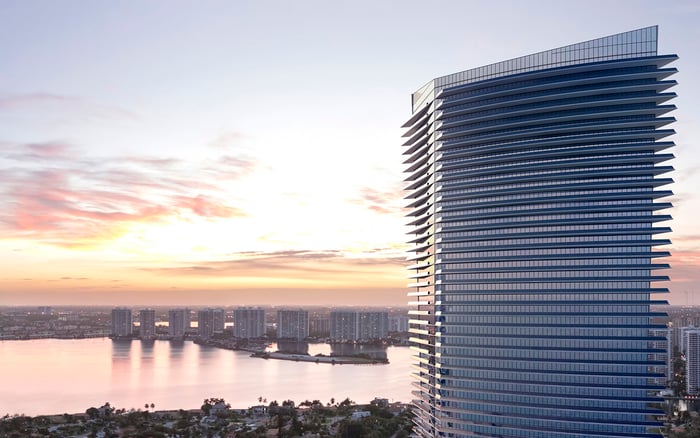
A disciplined South Florida preconstruction review separates contractual promises, recorded property rights, survey findings, and title-insurance coverage before a trustee commits family capital.

For a family office, a preconstruction purchase is more than a choice of views, finishes, and floor plans. The trustee is committing to a legal interest whose value depends on what the contract promises, what the recorded documents establish, and what the eventual title policy covers. Each requires a separate inquiry.
That discipline applies whether the search centers on The Residences at 1428 Brickell or a residence elsewhere in South Florida. A project's appeal cannot substitute for transaction-specific review. Before signing, counsel should separately verify the trustee's authority and intended deed vesting, while the family office identifies the ownership and use rights essential to its decision.
The objective is not simply a complete document file. It is a written understanding of what is being acquired, what remains unresolved, and what must happen before closing.
A title commitment states the proposed insurance and its conditions; it does not certify that the property is free of title problems. Begin with Schedule A: the proposed insured, insured estate, policy amount, and legal description. Have counsel reconcile those entries with the contemplated purchase and ownership structure.
Then distinguish Schedule B requirements from exceptions. Requirements identify matters that must be satisfied for the proposed coverage; exceptions identify matters excluded from it. A document's appearance in the commitment does not mean its consequences are insured.
Common Florida exceptions can concern current-year taxes, parties in possession, survey-disclosed encroachments, unrecorded easements, and mechanics' liens. Ask the title agent which exceptions can be removed or narrowed, and what evidence is needed. Treat each listed exception as remaining unless cleared to the insurer's satisfaction. Do not assume it will disappear at closing.
An exception summary is an index, not a substitute for the instrument it references. Obtain the recorded covenants, restrictions, easements, and other documents, then have counsel assess their operative language.
Restrictions can establish purchase options, rights of first refusal, approval rights, or rights of re-entry or forfeiture. These provisions warrant attention because they can affect the family's intended ownership, transfer, or use. Identified leases and easements likewise require a review of their actual terms; a commitment may exclude losses resulting from those terms and conditions.
For a Miami Beach acquisition, including a residence under consideration at The Perigon Miami Beach, the review should remain specific to the documents presented. A prestigious location does not establish whether a recorded restriction is acceptable to this purchaser.
A route that appears usable does not, by itself, complete the access analysis. Distinguish physical access, recorded legal access, and the access protection actually afforded by the proposed policy.
Ask counsel to identify the documents supporting any access right the family considers essential. Where an easement is involved, review its scope, beneficiaries, conditions, and obligations. Determine whether its terms support the intended use and whether the proposed policy leaves relevant risks outside coverage.
Public-record review is only part of this exercise. Unrecorded easement claims and rights of parties in possession can be excluded even when they do not appear in the title search. The practical question is twofold: what supports the family's use, and what happens if someone challenges it? Obtain transaction-specific answers rather than relying on a broad assurance that access exists.
Parking, storage, terraces, and similar components are documentary questions, not merely lifestyle features. Check whether the condominium documents identify or assign the claimed limited-common-element rights, and reconcile those provisions with the contract.
Florida condominium declarations must include survey and graphic-description materials sufficiently detailed to identify the land, common elements, units, relative locations, and approximate dimensions. Use those materials to compare the purchased unit designation and appurtenant rights with the declaration's treatment of units, common elements, and limited common elements.
When considering Bentley Residences Sunny Isles in Sunny Isles Beach, apply the same discipline: identify how every material premium component is documented. This is a review standard, not a statement about that project's particular title or allocations. Resolve discrepancies between the contract and governing documents before treating a component as secured.
When residential condominium parcels are offered before construction is complete, Florida law requires developers to make complete unit plans and specifications, plus plans for appurtenant common-element improvements, available for inspection. Compare these materials with the contract and required condominium disclosures. Marketing should not be the final authority for the rights or improvements being purchased.
Survey review addresses a different concern. Standard survey exceptions can leave boundary discrepancies, overlaps, encroachments, and other survey-revealed matters outside coverage. Under Florida's policy-exceptions statute, a qualifying survey completed within 90 days before closing and certified to the title insurer limits the survey exception to facts actually shown on that survey.
Ask counsel, the surveyor, and the insurer how that provision applies to the transaction. It neither promises that every survey issue will disappear nor substitutes for reviewing the matters the survey actually shows.
A family office should maintain a written exception matrix. For each entry, record the instrument, affected right, practical consequence, proposed cure or endorsement, responsible reviewer, and trustee approval status. Distinguish a documentary resolution from an insurance solution: removing an exception does not necessarily rewrite the underlying property rights.
The discipline is equally useful when evaluating Bay Harbor Towers. The purpose is to make reviews comparable across residences without assuming their documents or risks are identical.
Before signing, consider negotiating commitment-delivery deadlines, objection periods, updates through closing, and defined cure and termination remedies. These are contract recommendations, not automatic statutory entitlements. Identify which unresolved matters would change the family's decision and what contractual response would remain available.
Read an endorsement rather than merely requesting it by name. Restrictions-and-encroachments coverage remains subject to policy exclusions, Schedule B exceptions, and conditions. It is not blanket protection against every restriction or easement issue.
Before closing, refresh the review against the latest commitment, relevant recorded documents, survey materials, and proposed policy terms. The trustee's approval should distinguish resolved matters from accepted exceptions and identify any remaining dependency on future action. Keep contractual promises, recorded rights, survey findings, and insured coverage separate throughout.
This checklist supports, but does not replace, advice from Florida counsel, a licensed surveyor, and the issuing insurer.
For a considered approach to South Florida's residential opportunities, explore MILLION.
If branded residences are on your mind — as a home or as an allocation — we would be glad to share what we are seeing, privately.
Begin a quiet conversationNo. It states proposed insurance and the conditions for issuing that coverage, including requirements and exceptions.
Review the proposed insured, insured estate, policy amount, and legal description. Counsel should reconcile them with the contemplated purchase and intended ownership structure.
Requirements identify matters to satisfy for the proposed coverage. Exceptions identify matters left outside that coverage unless cleared to the insurer's satisfaction.
An exception summary may not reveal all operative rights and obligations. The underlying instrument can contain easements, approval rights, purchase options, or other consequential restrictions.
No. Review physical access, recorded legal access, and the protection afforded by the proposed policy separately.
Yes. Unrecorded easement claims and rights of parties in possession can be excluded even when absent from the public-record title search.
Compare the contract with the condominium documents and confirm how the claimed rights are identified or assigned. Do not rely on marketing alone.
Developers must make complete unit plans and specifications, along with plans for appurtenant common-element improvements, available for inspection.
A qualifying survey completed within 90 days before closing and certified to the title insurer limits the survey exception to facts actually shown on that survey. Confirm transaction-specific applicability with counsel and the insurer.
No. Its coverage remains subject to the policy's exclusions, Schedule B exceptions, and conditions.