A discreet planning framework for aligning liability limits, household staffing, caregiver access and future-ready renovations before buying a luxury Sunny Isles Beach condominium.
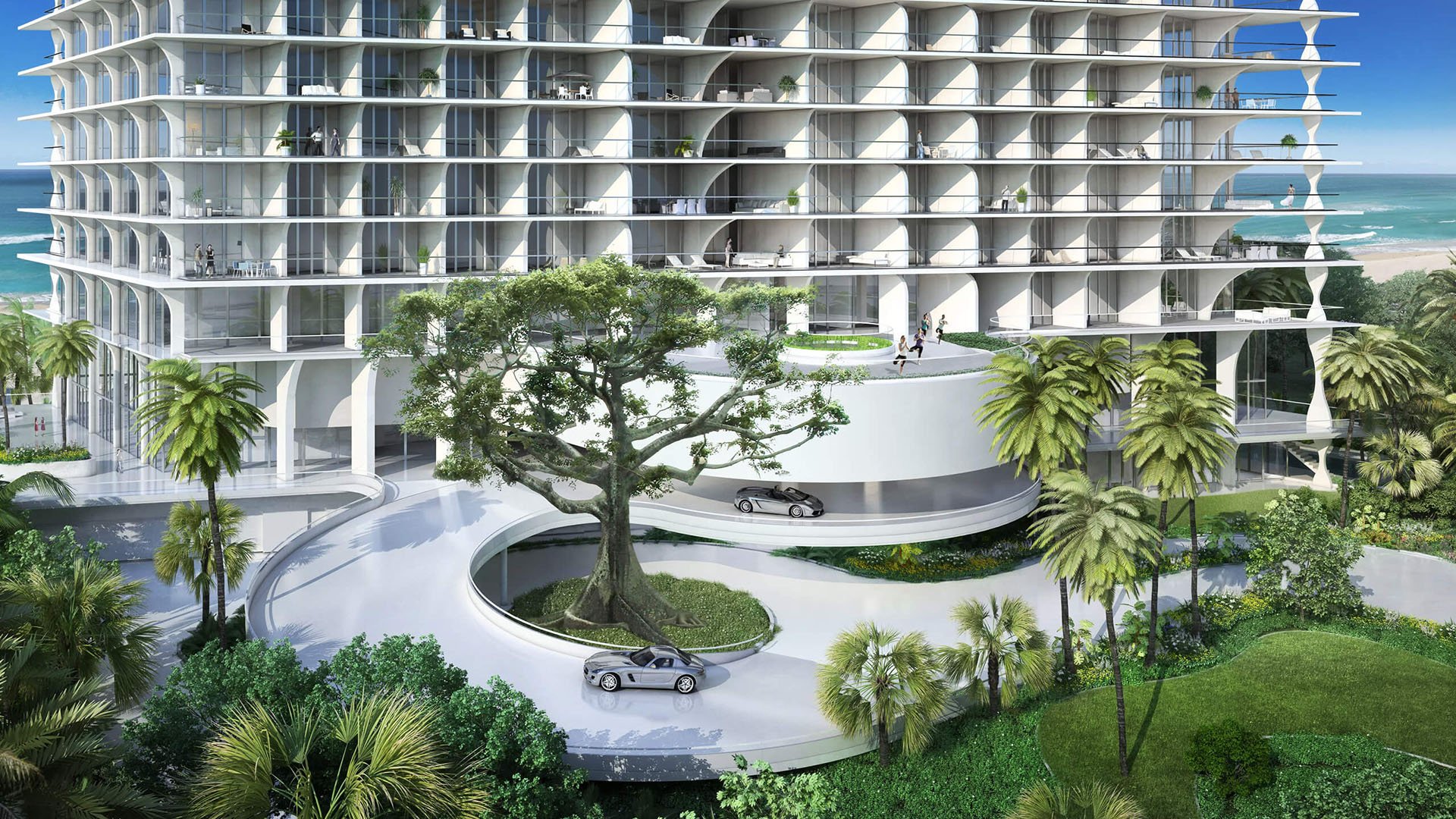
A Sunny Isles Beach acquisition may represent a single address, but its liability profile rarely stands alone. Buyers often arrive with other homes, investment accounts, vehicles, watercraft, valuable collections and household employees. The relevant question is not simply how much protection the condominium needs, but how much of the owner’s total wealth and future income could be exposed to a judgment.
For readers of MILLION Buyer's Guides, the prudent approach is to coordinate the residence with the family’s broader insurance architecture before closing. This is especially important for a waterfront or second-home purchase, where occupancy patterns, guests, vehicles and boats can complicate underwriting. Residences such as Bentley Residences Sunny Isles may shape a buyer’s lifestyle considerations, but insurance must reflect the buyer’s actual assets and exposures rather than assumptions based on the building.
The residence should be insured as one component of a complete private risk portfolio.
Personal umbrella insurance adds excess liability protection above underlying homeowners, auto and watercraft policies; it does not replace them. Insurers generally require specified minimum liability limits on those underlying policies before the umbrella responds, making policy alignment as important as the headline limit.
A common high-net-worth guideline is to carry an umbrella limit at least equal to total net worth, then account for future income that a judgment might reach. One planning formula is:
Umbrella limit = (net worth + future income potential) × 1.25
Under that framework, a household with $8 million in assets and $5 million in future-income exposure could indicate roughly $15 million to $20 million of protection. Planning ranges for affluent Florida households begin around $3 million to $5 million, rising toward $5 million to $25 million as assets and exposures increase. A home-and-boat household with more than $2 million in assets may merit consideration of approximately $2 million to $5 million because watercraft introduces another liability channel.
These figures are planning references, not universal prescriptions. Specialty private-client programs may offer umbrella towers from $1 million to $25 million and above. Estimated 2026 annual premiums range from about $150 to $500 for $1 million of coverage and approximately $1,500 to $4,000 for $25 million, subject to underwriting, claims history, drivers, vehicles, watercraft, properties, staff and requested limits.
Umbrella policies commonly address excess liability arising from vehicle collisions, premises incidents, personal injury, and libel or slander. Business activity, professional services, intentional acts and contractual disputes are commonly excluded. A buyer considering Jade Signature Sunny Isles Beach should ask an adviser to map these boundaries across every relevant policy, not merely review the condominium certificate.
Directly employed caregivers, nannies, housekeepers and estate staff create two distinct categories of exposure: workplace injury and employment-practices allegations. Standard homeowners and umbrella policies may not cover these risks unless the program includes appropriate household-employee, workers’ compensation or employment-practices protection.
Before a hire begins, establish who the employer is, whether the worker is engaged directly or through an agency, the duties performed, hours, payroll structure, driving responsibilities, and access to vehicles or watercraft. Each answer can affect insurance and legal obligations. No single staffing threshold can be applied safely to every Florida household, so buyers should obtain advice specific to the arrangement.
Workers’ compensation should be evaluated alongside employment practices liability insurance, often called EPLI, for allegations such as wrongful termination, harassment or discrimination. A coordinated private-client program can bring high-limit home, auto, umbrella, valuables, watercraft and domestic-staff coverage into a single review, reducing the chance that each adviser assumes another policy will respond.
Caregiver access in a private condominium is an operational matter, not a theoretical one. Before care is needed, owners should confirm association restrictions and building procedures for registration, identity verification, recurring entry, keys or credentials, privacy, parking, elevator use and after-hours arrival. Emergency contacts should remain current, and the household should know how a caregiver will enter if the resident cannot answer.
At The Ritz-Carlton Residences® Sunny Isles or any other managed tower, buyers should request the current condominium documents and written access protocols during diligence. The objective is not preferential treatment, but a lawful, documented routine that protects the resident’s privacy while enabling reliable care.
Florida’s assisted-living resident-rights framework provides covered residents with private communication and visits with people of their choice at least from 9 a.m. to 9 p.m. Those provisions primarily concern assisted-care settings and should not be presented as rules for every private condominium. They nevertheless underscore that autonomy, privacy and dependable human access belong at the center of long-term planning. Florida’s 2025 HB 1457 also addressed Medicaid long-term-care enrollment and aging-and-disability resource-center procedures, forming part of the broader care-planning backdrop rather than a substitute for private condominium protocols.
Florida defines aging in place as adjusting services to compensate for physical or mental decline while maximizing dignity and independence in a familiar, noninstitutional residence. In a luxury condominium, the strongest planning begins while choices can still be made deliberately.
Review circulation, thresholds, bathroom access, lighting, controls, storage reach and emergency egress with qualified professionals. Any proposed alteration must also align with current building-code, fire-safety, municipal and condominium-association requirements. A narrow Florida administrative rule, applicable in a specific building-modification context, calls for an additional accessible route or egress window when a second emergency route is required. It should not be treated as a universal rule for private condominiums.
Owners at Muse Residences Sunny Isles Beach or elsewhere should preserve drawings, permits, association approvals, contractor agreements and completion records. That file can document the scope and compliance of modifications if an accident, claim or later resale review occurs.
The most effective review is coordinated. Ask the insurance adviser to schedule every residence, vehicle, driver and watercraft; identify required underlying limits; test umbrella exclusions; and evaluate staff coverage. Ask counsel and the condominium team to clarify caregiver-access and alteration procedures. Then retain approvals, policies and emergency instructions in a file accessible to trusted family members or fiduciaries.
Revisit limits whenever wealth, future income, staffing, watercraft ownership, vehicle use or the residence itself changes. The objective is not maximum coverage for its own sake, but a coherent structure in which insurance, building operations and residential design support the same long-term plan.
For discreet guidance on selecting a Sunny Isles Beach residence that supports your long-term priorities, connect with MILLION.
If branded residences are on your mind — as a home or as an allocation — we would be glad to share what we are seeing, privately.
Begin a quiet conversationNo. It adds excess liability protection above qualifying homeowners, auto and watercraft policies, which must maintain carrier-required underlying limits.
A common starting point is total net worth plus reachable future income. One planning formula multiplies the sum of net worth and future income potential by 1.25.
No. It can be a floor rather than a universal target, particularly when a household has multiple properties, substantial liquid assets, vehicles or watercraft.
Estimated annual premiums range from about $150 to $500 for $1 million and from $1,500 to $4,000 for $25 million, subject to underwriting and exposures.
Not necessarily. Staff injuries and employment-related allegations may require workers’ compensation, household-employee coverage or EPLI.
EPLI may address allegations such as wrongful termination, harassment or discrimination, subject to the policy’s terms, conditions and exclusions.
Confirm registration, identity checks, credentials, parking, elevator use, privacy procedures, emergency contacts, after-hours entry and association restrictions.
No. Florida’s cited resident-rights provisions primarily govern covered assisted-living settings and should not automatically be applied to private condos.
Retain plans, permits, association approvals, contractor agreements and completion records to document the work’s scope and compliance.
Review it when assets, future income, staffing, vehicles, watercraft, occupancy or the residence changes, and whenever underlying policy requirements change.