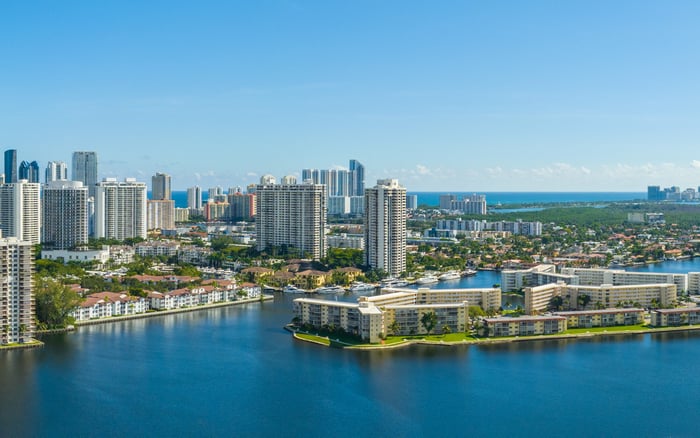
In Aventura, condominium underwriting extends beyond the residence to the association itself. This guide explains how the questionnaire, project eligibility, structural records, reserves, insurance, ownership mix, and special assessments can influence both a 2026 purchase and the next buyer’s access to financing.

In Aventura, the most consequential financing question may have little to do with a buyer’s liquidity, credit profile, or chosen residence. Conventional lenders also underwrite the condominium project. A beautifully renovated home and an exceptionally qualified borrower cannot, on their own, cure a building that fails applicable project standards.
That distinction is central to warrantability. A warrantable condominium meets the relevant Fannie Mae or Freddie Mac project criteria, giving an eligible purchaser access to conventional financing, broader lender competition, and generally more favorable pricing. A non-warrantable project may still be financeable, but the available routes often shift to portfolio, private, non-QM, or DSCR loans-potentially with lower leverage, higher rates, or more exacting underwriting.
The best buyer’s guides therefore treat financing as both an acquisition issue and an element of asset quality. In a market defined by waterfront towers, established associations, and varied ownership profiles, buyers should assess not only whether a loan works today, but also whether the project is likely to remain accessible to a broad financing pool at resale.
A luxury residence cannot outrun the financial and structural profile of its building.
The condominium questionnaire is a lender’s structured inquiry into the project. It commonly addresses ownership concentration, reserve funding, owner delinquencies, litigation, insurance, commercial use, rental operations, and structural condition. Its purpose is not to judge the finishes or view from a single residence, but to expose risks shared across the condominium.
Buyers should obtain the completed questionnaire before waiving financing protections. It should be reviewed alongside current and prior budgets, the reserve study, insurance summary, milestone and engineering reports, special-assessment history, litigation information, governing documents, rental rules, and recent board minutes. The questionnaire is a valuable snapshot; the supporting records provide the depth required to test its answers.
This standard should follow the buyer across the local luxury corridor. Someone comparing Avenia Aventura with Bentley Residences Sunny Isles should ask the lender to evaluate each project independently. Eligibility at one condominium says nothing about another, even when the residences appeal to a similar buyer.
A notable 2026 policy shift removed Fannie Mae’s 50 percent investment-property concentration limit for investor loans in established condominium projects reviewed under the Full Review option. This may restore conventional eligibility for certain established South Florida buildings previously excluded solely because investors owned more than half of the residences.
The change is meaningful but narrow. It does not waive the remainder of the project review or make every investor-heavy building warrantable. New and newly converted projects remain subject to a 50 percent investor-concentration limit. Ownership mix therefore remains especially important when evaluating a recently delivered tower or conversion.
Single-entity concentration also warrants attention. A commonly cited limit allows one person or entity to own no more than 20 percent of the residences in a project with at least 21 units, and no more than two residences in a project containing five to 20 units. Buyers should have their lender confirm the rule and review type applicable to the specific transaction.
Reserves are among the most closely scrutinized entries in an association budget. Some Florida lenders use approximately 15 percent of operating expenses as a benchmark unless an adequate reserve study supports a different level. Other guidance references a 10 percent annual reserve contribution or a recent reserve study demonstrating sufficiency. Neither percentage is universal. Agency rules, review type, project facts, and lender overlays can yield a different conclusion.
Delinquencies matter as well. A project may fail conventional review if more than 15 percent of owners are over 60 days late on association dues or assessments. This is more than an accounting concern. Elevated arrears can weaken cash flow, complicate reserve funding, and concentrate the cost of building obligations among owners who remain current.
Special assessments require separate analysis. A buyer should identify the purpose, total project cost, allocation to the residence, payment schedule, owner delinquency rate, and whether the underlying work has been fully scoped and funded. A large assessment tied to a defined, funded repair program presents a different profile from one that addresses only part of an unresolved condition.
For an investment or second-home acquisition, these questions affect leverage and carrying costs before they influence returns. They remain relevant even when the purchaser intends to pay cash.
Active litigation involving structural safety, major construction defects, or the association’s financial stability presents a significant warrantability risk. So do deferred major repairs and adverse findings in Florida milestone inspection records. Buyers should establish whether the building completed its milestone inspection, whether a Phase 2 inspection was required, and whether identified repairs remain open.
Insurance is another project-level inquiry. The association’s summary and applicable coverage should reach the lender early, rather than in the final days before closing. The objective is to identify a coverage issue while contractual financing protections remain in place and sufficient review time is still available.
Operations can be equally decisive. Commercial space beyond allowable project percentages, often cited near 35 percent, can impair conventional approval in a mixed-use condominium. Hotel-style services, centralized rental management, and daily or weekly rentals may prompt a condo-hotel classification that generally requires specialized financing.
A buyer comparing Turnberry Ocean Club Sunny Isles and 2000 Ocean Hallandale Beach should not infer lending treatment from architecture, location, or amenity positioning. The lender must examine the governing documents, operations, association finances, insurance, and project status in force at the time of review.
Non-warrantable does not necessarily mean unfinanceable. Portfolio lenders, private banks, non-QM providers, and certain DSCR programs may accommodate a project that conventional channels will not. For investor-owned residences, DSCR financing may remain available, although non-warrantable projects commonly face lower maximum loan-to-value ratios and pricing premiums.
Some products may proceed without reviewing a condominium questionnaire, association budget, or windstorm insurance. Such a loan can solve the immediate closing requirement, but it does not resolve the building’s underlying condition. It may also leave the owner exposed to a narrower future buyer pool.
The prudent response is to separate loan availability from project quality. Buyers should understand why the project is non-warrantable, whether the cause is temporary or structural, what remediation is underway, and which financing channels are likely to remain available if market conditions change.
Warrantability is not permanent. Budgets, insurance, litigation, inspections, delinquencies, repairs, rental practices, and ownership concentration can all change after closing. A project approved today may encounter difficulty later, while a previously ineligible building may improve its position.
That fluidity makes association governance part of long-term value stewardship. Before signing, buyers should ask their lender and Florida condominium attorney to review the project documents, preserve appropriate financing protections, and distinguish agency requirements from individual lender overlays. They should also monitor budgets, assessments, insurance, engineering matters, and board decisions throughout ownership.
Future resale depends on more than presentation and pricing. A warrantable project can expand the prospective buyer pool to include conventional borrowers. A non-warrantable project may leave the next purchaser more dependent on cash or specialized credit, potentially affecting negotiating leverage and transaction timing.
For discreet guidance on evaluating Aventura opportunities through both lifestyle and financeability, connect with MILLION.
If branded residences are on your mind — as a home or as an allocation — we would be glad to share what we are seeing, privately.
Begin a quiet conversationIt is a condominium project that satisfies applicable Fannie Mae or Freddie Mac standards, allowing eligible buyers to pursue conventional financing.
Not under conventional project guidelines. Warrantability is primarily determined at the building level, separately from the borrower and residence.
It typically examines ownership concentration, reserves, delinquencies, litigation, insurance, commercial use, rental operations, and structural condition.
Fannie Mae removed the 50 percent investor-concentration limit for investor loans in established projects reviewed under the Full Review option.
No. New and newly converted projects remain subject to a 50 percent investor-concentration limit.
A project may fail conventional review when more than 15 percent of owners are over 60 days delinquent on dues or assessments.
No. Guidance may reference 10 or approximately 15 percent, but the applicable agency rule, review type, reserve study, and lender overlay must be confirmed.
Adverse findings, deferred repairs, or unresolved Phase 2 work can lead a lender to decline the project or require non-warrantable financing.
Possibly. Portfolio, private, non-QM, or DSCR financing may be available, often with lower leverage, higher pricing, or stricter underwriting.
It can broaden the future buyer pool to conventional borrowers, while non-warrantability may make a resale more dependent on cash or specialized financing.